© Vasco Stocker Vilhena
On the opening day, 8 October, there will be a conversation at 9:45 pm between the artist and Leopoldo Iribarren, philosopher and lecturer at EHESS (Paris), who wrote the exhibition text.
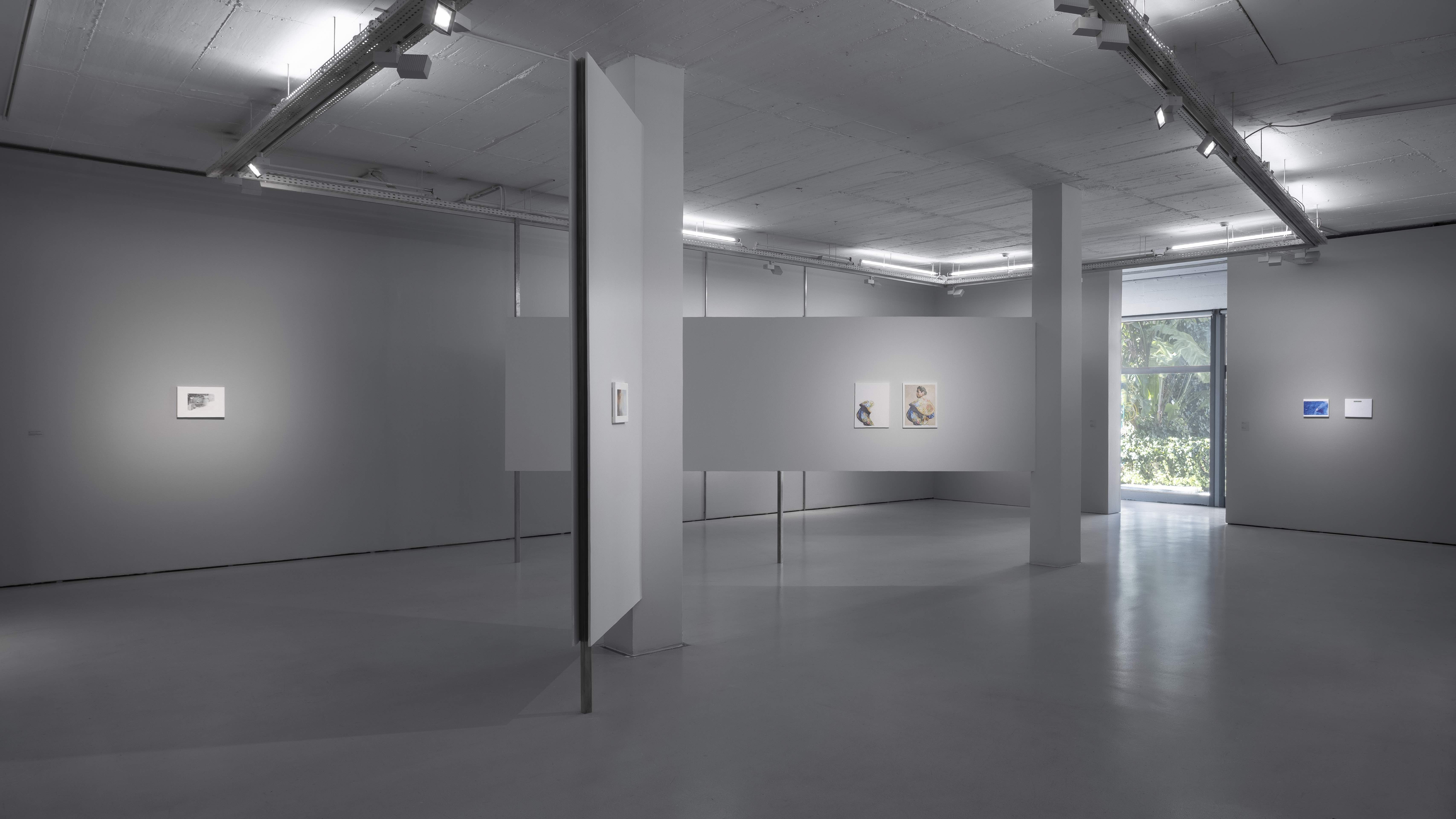
The exhibition was made in collaboration with Aurora Arquitectos.
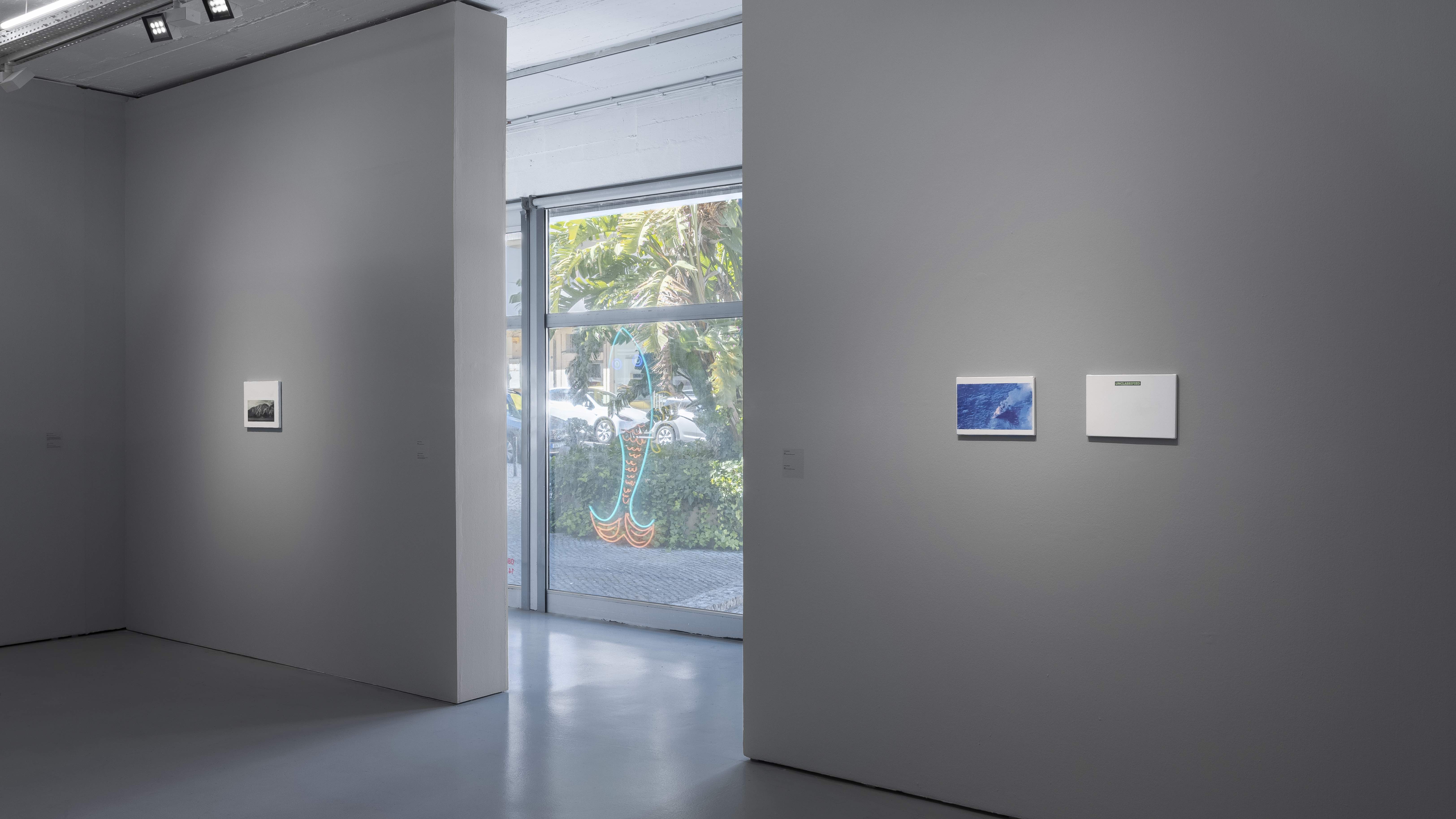
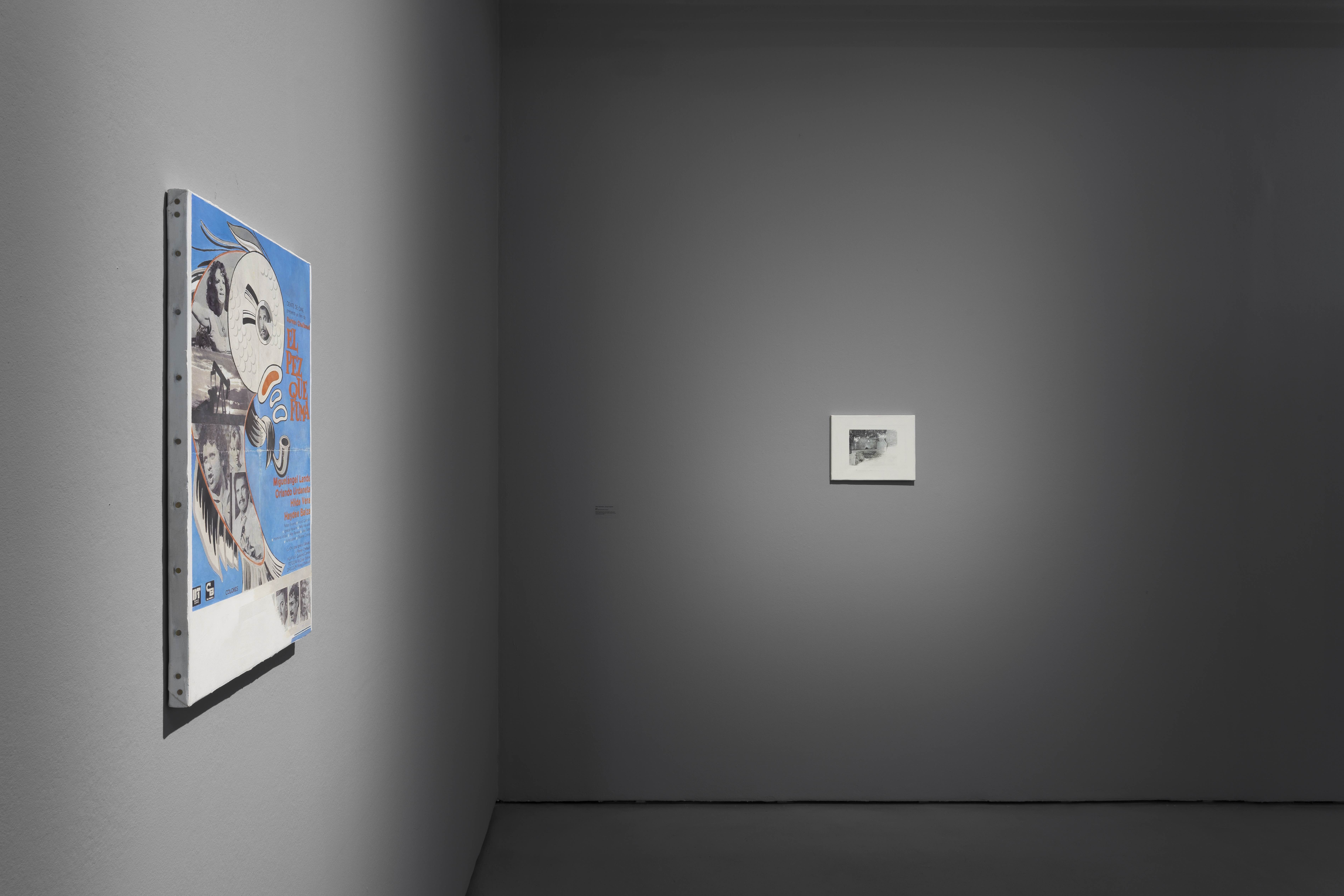
For those who did not experience the effervescent Venezuela of the 1970s, the title of Juan Araujo’s exhibition may seem enigmatic. For those who remember that lost world, El pez que fuma evokes a celebrated film by Román Chalbaud about a marginal brothel in the port of La Guaira, where the grotesque and the folkloric coexist with the moral corruption of an oil-rich country proud of its triumphant modernity. A world turned upside down, where the anomalous becomes commonplace and marginality becomes a key to reading the social whole, the brothel in El pez que fuma is one of those places that exist in every culture, inscribed within the very institution of society and functioning as localisable utopias in which the real spaces of culture are at once represented, contested, and inverted—what Michel Foucault called a ‘heterotopia’. For Juan Araujo, the smoking fish that serves as the brothel’s emblem now welcomes us at the entrance to the gallery represents the chimerical, heterotopic creature of the Latin American modern scene: a figure that reveals the phantasmatic and contradictory dimension of its ideology, marked by the developmentalist imperative and by the conviction that inhabiting, as ‘noble savages’, an incorruptible Edenic nature.
Over the years, Juan Araujo’s work has cultivated an elective affinity with heterotopias in their many forms: modernist architecture as an ephemeral aestheticisation of political voluntarism, the museum as a material totalisation of time, and bullfighting as the forgetting of death in the very act of staring it in the face (to borrow Luis Pérez Oramas’s felicitous phrase) are some of the ‘counter-spaces’ that recur in Araujo’s painting. Each, in its own way, breaks with conventional chronology to develop its own way of inhabiting time, whether by accelerating, accumulating, or suspending it. Araujo’s work explores pictorial possibilities for representing temporalities that historical narrative, bound to chronology, tends to efface. His painting renders visible the ‘heterochrony’ of these places by figuring the successive layers of mediation (photograph, book, screen) that inexorably distance us from their presumed original ‘aura’ — painting of the image in context, of the image within the image. The spatial and temporal separation that characterises every heterotopia becomes all the more visible as Araujo reveals the historical web of mediations sedimented in its image.
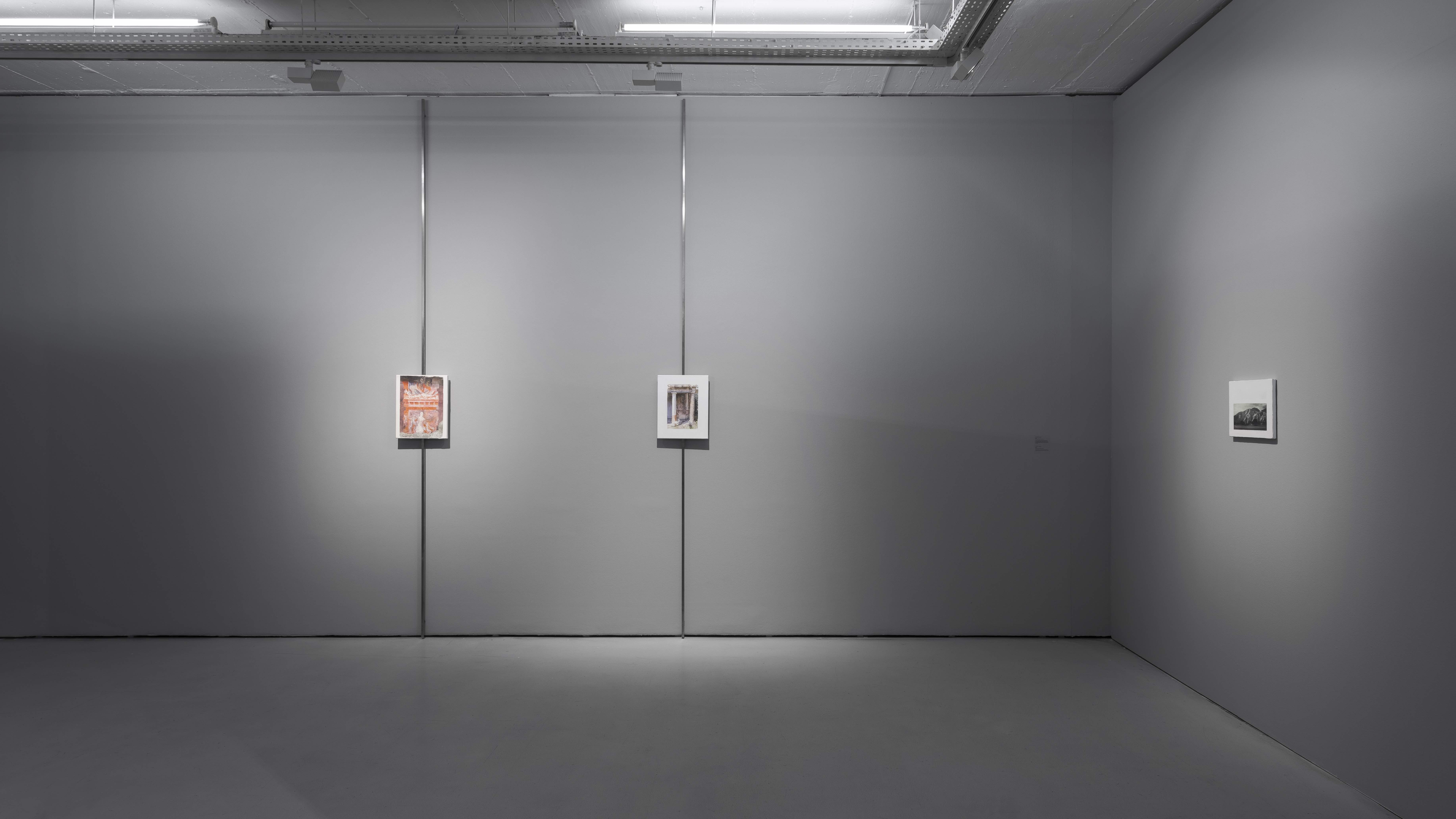
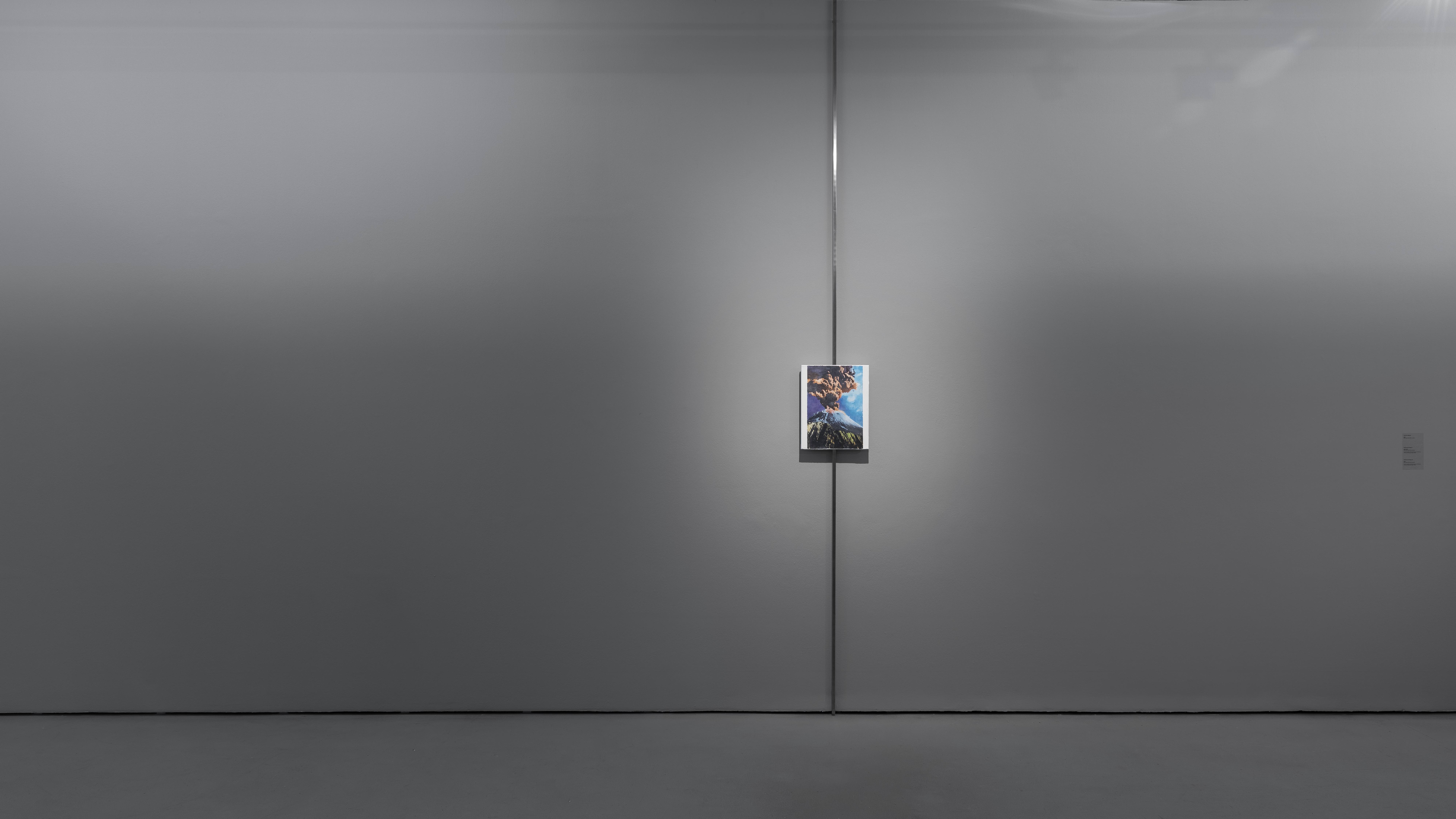
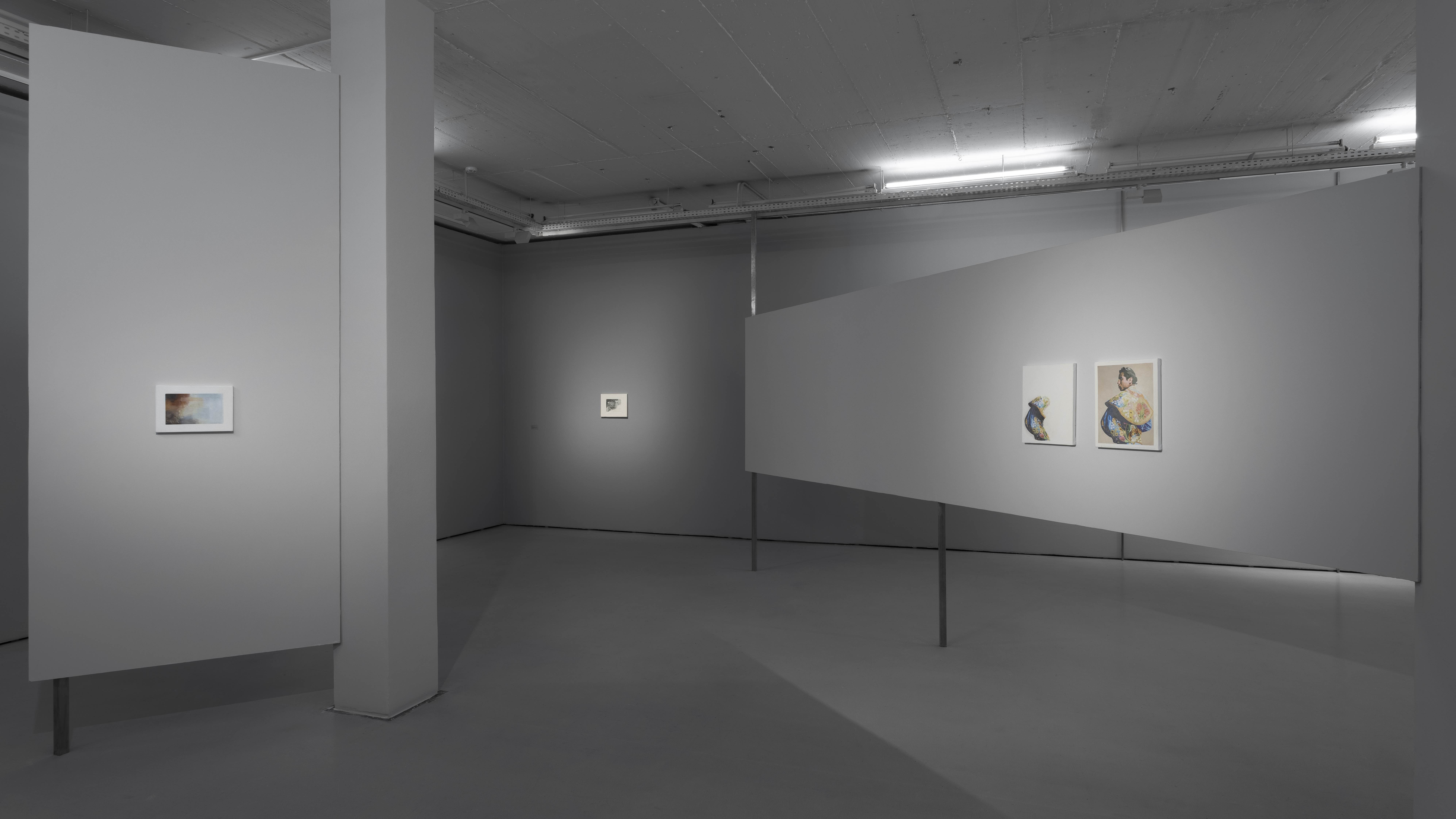
The works in this exhibition explore, in pictorial terms, the question of the figurability of time and memory. Above all, they are images of lost worlds, dead cities, ruins, and stones that set their own plasticity against time: their capacity to fragment, to survive, and to signify the obsolescence of things. For Juan Araujo, there is a pictorial connection between the trace, a simple mark on the surface of the ground; the vestige, the more or less legible imprint of a natural or human action; and the ruin proper, as the disintegration of a geological landscape or a monument of culture. Trace, vestige, and ruin belong as much to nature as to culture and partake in the devastating, but also consoling, action of time and memory. Geological phenomena are but one aspect of the formation of ruins; in a sense, they constitute their sketch, as Araujo’s painting demonstrates by bringing together, within a single chromatic palette, the representation of volcanoes (Vesuvius and Parapicutín) and that of ruins (the Pompeia series). Where historical narrative establishes a causal relation between geological phenomenon and ruin, painting proposes a continuity, a chromatic bridge between nature and culture. In this sense, it is no coincidence that Mount Ávila, the omnipresent silhouette separating Caracas from the Caribbean coast, was painted from a black-and-white photograph, lending it a spectral tonality that contrasts with the chromatic saturation of the representations of volcanoes in this exhibition. Repeated countless times in Venezuelan painting, the traditional iconography of Ávila avoids representing the city and the vicissitudes of its history, as though further to emphasise the national myth of a primordial nature. Araujo’s work foregrounds this timeless and immutable presence, at once a geological wall and a symbolic construction that stands in for the city.
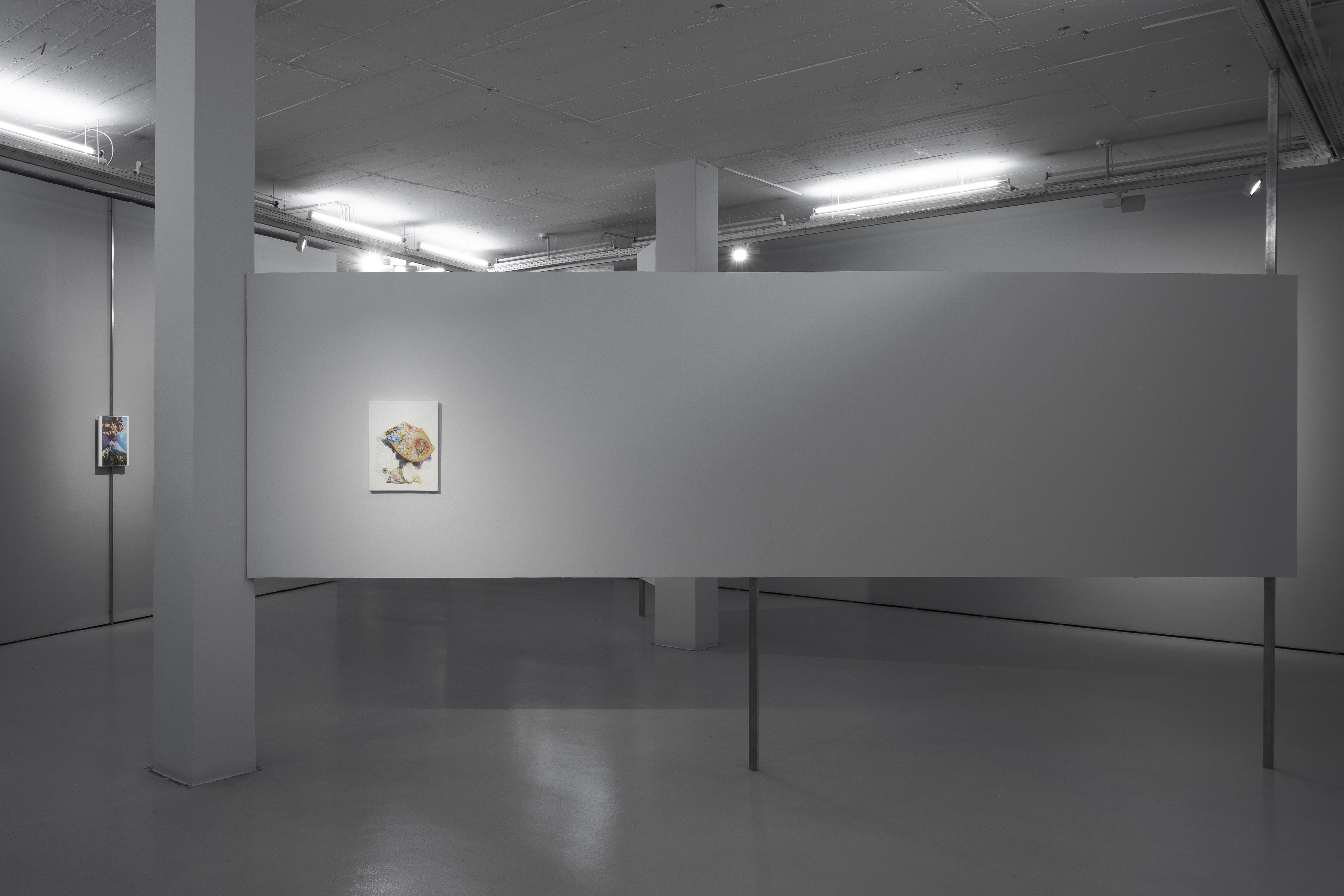
The same colour palette that unifies nature and culture in the preceding series reappears in a group of paintings devoted to the traje de luces worn by ‘Diamante Negro’, a celebrated Venezuelan bullfighter whose bullfighting style became established in the 1950s, in parallel with the country’s frenetic modernisation. This chromatic choice is all the more deliberate in that Araujo works from a black-and-white photograph taken by the art historian Alfredo Boulton. In their extraordinary bucolic beauty, these paintings explore the subversive power of bullfighting: the evanescent representation of a popular hero capable of ritually transforming the violence of nature into art — the reverse of a modernising ideology that authoritatively projects the uniformity of international time onto a rural country.
For a ruin to exist, the human gaze must confer symbolic value upon stones. In the history of art, that value oscillates between the allegorical representation of the ruin and its archaeological reconstruction. In the allegorical genre, whose undisputed master is Nicolas Poussin, the ruin reveals an experience that is at once artistic and moral. His representations of ancient cities and temples seem inscribed in a future time, in which neither nature nor human beings have fully accomplished their works. They are like unfinished paintings: a deconstruction of what they represent and a premise of what is yet to come. In this exhibition, the Patio venezolano series reappropriates and updates the codes of that pictorial tradition. Araujo depicts one of the spaces of the Venezuelan Pavilion — now abandoned — designed by Carlo Scarpa in 1953 in the Giardini of the Venice Biennale. A ruined temple in a park devoted to contemporary art, the Venezuelan Pavilion produces the effect of a vanitas. In the manner of Poussin, these paintings by Araujo capture the slow degradation of things in the crepuscular harmony of stones and trees. Yet here there is no allusion to Antiquity, but rather to a contemporary ruin that invites melancholy: the allegorical landscape of an unfinished modernity.
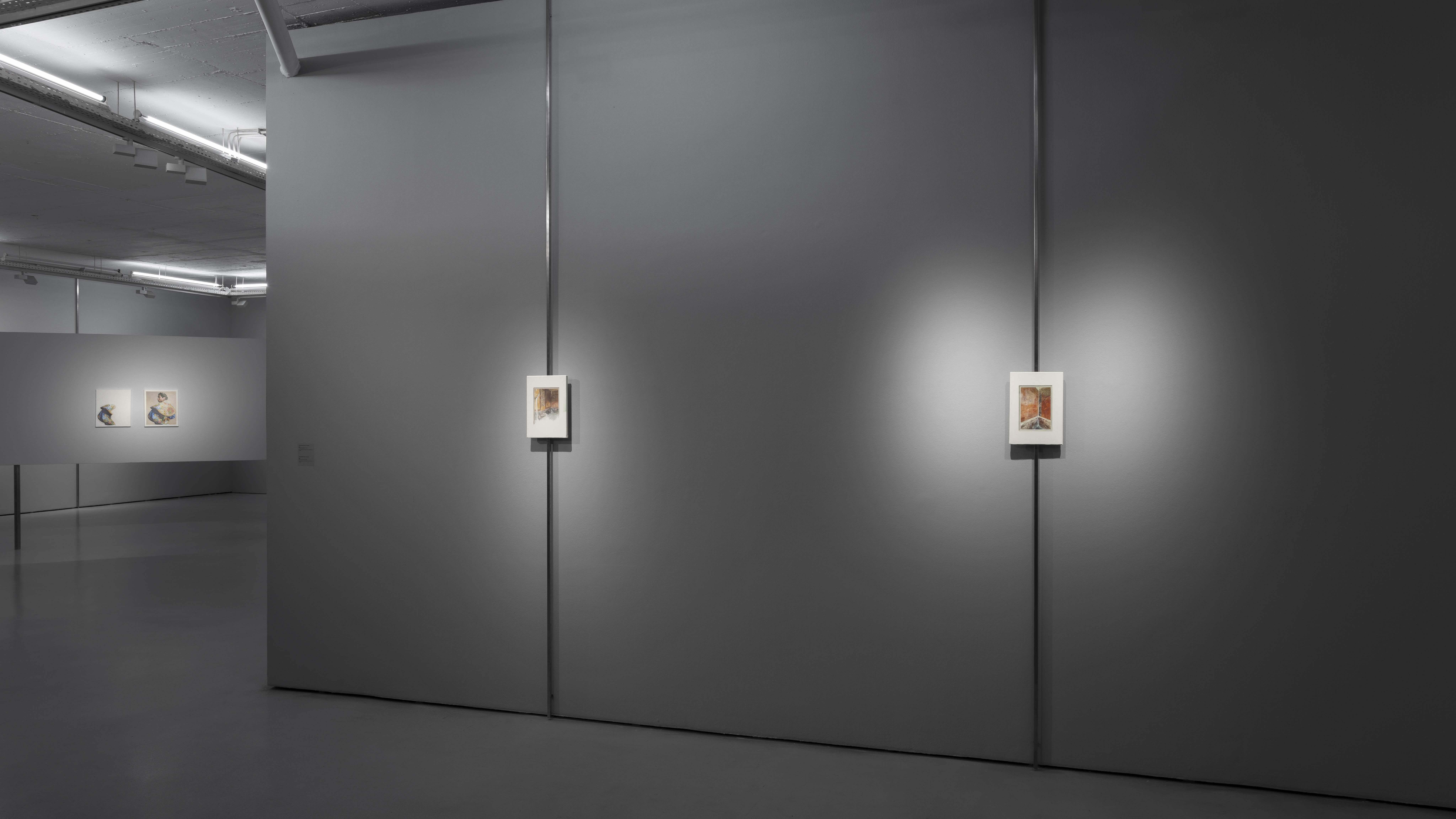
By contrast, the pictorial genre of archaeological reconstruction seeks to capture the ruin’s own historicity and make it identifiable. It seeks, with scholarly precision, to recreate the admirable architectures of a world lost through an accident of history. One need only recall a few paintings by Giovanni Paolo Panini or Antonio Joli to gain a sense of this genre, whose language Juan Araujo recovers in the Pompeia series. These paintings, which recall the motif of excavation, uncover the patina accumulated on decrepit walls, as though the brushstroke were revealing a remote past suddenly made visible. Freed from the moral lesson, this representation of the ruin plays with the precepts of descriptive art. Between moralising fatality and the antiquarian cult of the past, Araujo explores the ruin in its mediating function between nature and human history, between oblivion and memory.
Finally, the exhibition reminds us that ruin and destruction are not only images of the past; they are also consequences of the becoming of empires. In the Unclassified series, Juan Araujo deconstructs, in three stages, the military iconography disseminated by the United States government following the summary execution of vessels in the Caribbean Sea. The first painting ironically displaces the pictorial codes of naval battle scenes to show, from a bird’s-eye view, a launch struck by a missile. The second isolates the word ‘Unclassified’ on a white canvas — a kind of politicised Malevich — denoting state secrecy and connoting imperial power’s capacity to reveal the image of its own destructive force. The third painting recreates the pixelated image of a burning boat using a palette that evokes Turner’s celebrated A Disaster at Sea. Juan Araujo summons a shared artistic heritage to ward off absolute power, distance himself from it, and interpret it. But also, to transform the staging of a summary execution into a pictorial burial for its anonymous victims.
By definition, the ruin is unstable: it oscillates between materiality and immateriality, memory and oblivion, nature and culture. This indeterminacy lends it a capacity for universal signification, since every culture possesses traces, vestiges, or ruins of a vanished time through which it mediates its relation to the past. Yet anyone who, like Juan Araujo, aspires to produce a poetics of ruin can only excavate their own memory. Walter Benjamin’s short 1932 text ‘Excavation and Memory’ retrospectively encapsulates the kind of pictorial archaeology Araujo pursues in this exhibition:
«Language has unmistakably made plain that memory is not an instrument for exploring the past, but rather a medium. It is the medium of that which is experienced, just as the earth is the medium in which ancient cities lie buried. He who seeks to approach his own buried past must conduct himself like a man digging. Above all, he must not be afraid to return again and again to the same matter; to scatter it as one scatters earth, to turn it over as one turns over soil. For the ‘matter itself’ is no more than the strata which yield their long-sought secrets only to the most meticulous investigation. That is to say, they yield those images that, severed from all earlier associations, reside as treasures in the sober rooms of our later insights—like torsos in a collector’s gallery. […] Epic and rhapsodic in the strictest sense, genuine memory must therefore yield an image of the person who remembers, in the same way a good archaeological report not only informs us about the strata from which its findings originate, but also gives an account of the strata which first had to be broken through.»1
Like the ruin, memory is stratigraphic: an accumulation of debris transformed into layers. In Juan Araujo’s pictorial archaeology, attentive to the sedimentation of images, every layer counts, including those traversed without yielding immediate results: to reach Venezuela, it was necessary to pass through Pompeii.
Leopoldo Iribarren
October 2026
___________________
1 Walter Benjamin, “Excavation and Memory,” in Selected Writings, Volume 2, Part 2: 1931–1934, ed. Michael W. Jennings, Howard Eiland and Gary Smith, trans. Rodney Livingstone et al., Cambridge, MA/London, The Belknap Press of Harvard University Press, 2005, p. 576.